
Click fraud drains billions of dollars from american businesses each year, quietly undermining digital ad campaigns and skewing vital performance data. The stakes are higher than most realize, with marketers losing $11.6 billion to fraudulent clicks in a single year according to major university studies. For advertisers, this silent threat poses real risks, from wasted budgets to misinformed strategy. Understanding the true impact of click fraud puts you in a stronger position to protect both your campaign dollars and your marketing outcomes.
Key Takeaways
| Point | Details |
|---|---|
| Financial Impact | Click fraud led to $11.6 billion in losses for advertisers in 2014, distorting campaign metrics. |
| Detection Techniques | Advanced machine learning models are essential for identifying complex patterns of fraudulent interactions. |
| Prevention Strategies | Implementing robust IP filtering and behavioral analysis tools can significantly mitigate click fraud risks. |
| Legal Consequences | Click fraud poses potential legal issues, including contract violations and regulatory scrutiny, affecting advertiser-platform relations. |
What Click Fraud Means For Advertisers
Click fraud represents a significant financial threat to digital advertisers, silently eroding marketing budgets and distorting campaign performance metrics. Academic research from the University of Texas at Dallas reveals the staggering economic impact: in 2014 alone, marketers lost $11.6 billion due to fraudulent clicks in pay-per-click advertising.
The consequences extend far beyond direct monetary losses. When fraudulent clicks artificially inflate advertising costs, advertisers face complex challenges in accurately measuring campaign effectiveness. Digital advertising fraud disrupts core performance indicators, forcing marketers to second-guess their strategic investments. Marketing Science research suggests that these manipulations can prompt advertisers to lower their bidding strategies, potentially transferring financial surplus from advertisers to search platforms.
The mechanisms of click fraud are sophisticated and multifaceted. Malicious actors employ various techniques to generate fake clicks, including:
- Bot networks that simulate human browsing behavior
- Click farms with multiple devices generating artificial traffic
- Competitor sabotage designed to drain rival advertising budgets
- Automated scripts targeting specific advertising campaigns
For digital marketers, understanding click fraud means recognizing it as a persistent, evolving threat. Proactive monitoring, advanced traffic analysis, and implementing robust verification technologies become critical defensive strategies. Smart advertisers now invest in sophisticated detection tools that can distinguish between genuine user engagement and fraudulent interactions, protecting their marketing investments from these increasingly complex digital threats.
Common Types Of Click Fraud Schemes
Click fraud encompasses a range of sophisticated digital deception techniques designed to exploit online advertising systems. Comparative research in the International Journal of Safety and Security Engineering highlights multiple methods malicious actors use to generate fraudulent interactions, targeting digital advertising ecosystems.
Some of the most prevalent click fraud schemes include:
- Bot Network Attacks: Automated software programs that mimic human browsing behavior, generating massive volumes of fake clicks
- Click Farms: Organized groups using multiple devices and human workers to manually generate artificial traffic
- Competitor Sabotage: Deliberate attempts to drain rival advertising budgets by generating invalid clicks
- Proxy-Based Fraud: Using numerous IP addresses to mask repeated clicks from the same source
Research indicates that mobile advertising is particularly vulnerable, with approximately 40% of mobile ad clicks being either fraudulent or accidental. These schemes operate by exploiting technological vulnerabilities in ad tracking and verification systems, creating complex challenges for digital marketers.
The economic implications are significant. Fraudsters develop increasingly sophisticated techniques to circumvent detection, using advanced technologies like IP rotation, browser fingerprint manipulation, and complex bot networks. Smart advertisers must continuously evolve their defensive strategies, implementing multi-layered verification technologies that can distinguish between genuine user engagement and artificially generated traffic. Understanding these intricate fraud mechanisms becomes crucial for protecting marketing investments and maintaining the integrity of digital advertising ecosystems.
How Click Fraud Operates Technically
Click fraud emerges as a complex technological manipulation targeting digital advertising infrastructure. Research from the University of Delaware reveals how malicious actors exploit pay-per-click advertising models through sophisticated technical mechanisms designed to generate artificial traffic and undermine advertising systems.
The technical architecture of click fraud typically involves several intricate strategies:
- Automated Script Deployment: Programmatic scripts that simulate human browsing patterns
- Botnet Orchestration: Distributed networks of compromised computers generating coordinated fake clicks
- IP Spoofing: Masking original source locations through complex routing techniques
- Browser Fingerprint Manipulation: Creating unique digital signatures to bypass basic detection algorithms
Advanced technical research from academic sources demonstrates that modern click fraud operations leverage increasingly sophisticated technologies. These include machine learning algorithms that can adapt to detection mechanisms, proxy networks that rotate IP addresses, and complex browser automation tools that mimic genuine user interactions with remarkable precision.

The most advanced click fraud techniques operate by understanding and exploiting the subtle nuances of digital advertising tracking systems. Fraudsters continuously develop methods to make artificial clicks appear as authentic as possible, using techniques like gradual click generation, realistic mouse movement simulation, and time-based interaction patterns. By creating multi-layered, dynamically changing fraud infrastructures, these malicious actors can generate significant financial damage while remaining difficult to detect and trace.
Legal And Business Implications Of Click Fraud
Click fraud represents a complex legal and financial challenge that extends far beyond simple digital misconduct. Research from the University of Texas at Dallas highlights the critical lack of effective controls in pay-per-click advertising, revealing significant potential for legal disputes and financial losses that impact entire digital advertising ecosystems.
The legal landscape surrounding click fraud involves multiple complex dimensions:
- Contract Violations: Potential breach of advertising platform terms of service
- Potential Civil Litigation: Grounds for lawsuits between advertisers and platforms
- Regulatory Scrutiny: Increasing attention from consumer protection agencies
- Intellectual Property Challenges: Potential infringement and damages claims
Marketing Science research suggests that the search advertising industry would significantly benefit from implementing neutral third-party auditing of click fraud detection algorithms. This recommendation underscores the critical need for transparent, independent verification mechanisms that can protect advertisers’ financial interests and maintain the integrity of digital advertising platforms.
Business implications extend beyond immediate financial losses. Companies facing persistent click fraud risk damaging their reputation, losing investor confidence, and experiencing reduced marketing effectiveness. Smart organizations are now investing in advanced fraud detection technologies, developing comprehensive risk management strategies, and demanding greater accountability from advertising platforms. The evolving legal and technological landscape requires a proactive, sophisticated approach to identifying, preventing, and mitigating the complex risks associated with click fraud.
Detecting Signs Of Click Fraud Activity
Click fraud detection requires a sophisticated, multi-layered approach that combines technical analysis and behavioral monitoring. Research from the International Journal of Safety and Security Engineering demonstrates that advanced machine learning models can effectively identify complex patterns of fraudulent digital interactions.
Key indicators of potential click fraud activity include:
- Unusual Traffic Patterns: Sudden spikes or consistent click patterns from similar IP ranges
- Abnormal Conversion Rates: Clicks that do not result in genuine user engagement
- Rapid Click Sequences: Mechanically fast clicks inconsistent with human interaction
- Geographic Inconsistencies: Traffic from unexpected or irrelevant global locations
- High Bounce Rates: Immediate page exits suggesting automated interactions
University of Delaware research recommends that advertisers develop proactive testing strategies to independently verify user engagement. This involves analyzing detailed metrics beyond surface-level click data, including:
- Precise time spent on landing pages
- Interaction depth and scroll patterns
- Verified user journey through multiple site elements
- Cross-referencing IP and device signature data
The most advanced click fraud detection approaches now leverage artificial intelligence and machine learning algorithms that can dynamically adapt to evolving fraudulent techniques. These sophisticated systems continuously learn from new data, creating increasingly precise models that can distinguish between genuine user interactions and artificially generated traffic with remarkable accuracy. Smart advertisers invest in these intelligent monitoring tools, transforming click fraud detection from a reactive process to a proactive, predictive defense mechanism.
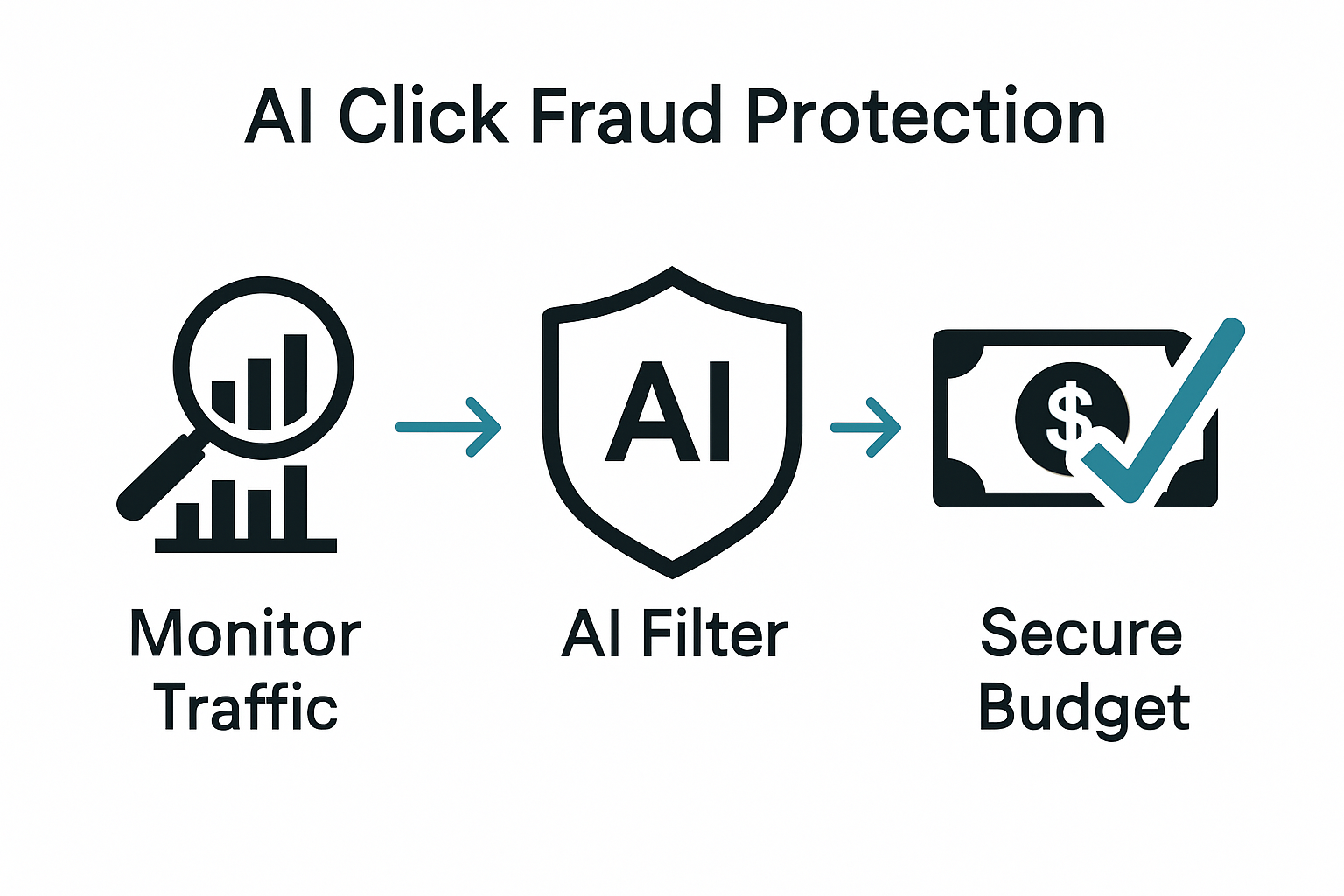
Preventing And Mitigating Click Fraud Risks
Click fraud prevention requires a comprehensive, strategic approach that combines technological solutions with proactive monitoring techniques. Research from San Jose State University highlights the potential of developing low-cost detection systems that can effectively mitigate digital advertising fraud risks.
Key strategies for preventing click fraud include:
- Advanced IP Filtering: Blocking suspicious IP ranges and known fraudulent network sources
- Machine Learning Algorithms: Implementing intelligent systems that learn and adapt to new fraud patterns
- Strict Traffic Verification: Using multi-step authentication for suspicious click interactions
- Behavioral Analysis Tools: Tracking user engagement beyond simple click metrics
- Geographical Traffic Screening: Monitoring and controlling traffic from high-risk regions
Research from the International Journal of Safety and Security Engineering emphasizes the critical importance of developing resilient, adaptive solutions that leverage explainable AI techniques. This approach transforms click fraud prevention from a reactive defense into a predictive, intelligent system that can anticipate and neutralize potential threats before they cause significant damage.
The most effective click fraud prevention strategies now combine multiple layers of technological and analytical defenses. Smart advertisers invest in comprehensive monitoring systems that integrate real-time data analysis, machine learning algorithms, and continuous fraud pattern recognition. By adopting a holistic approach that combines technological tools, detailed traffic analysis, and proactive risk management, organizations can significantly reduce their vulnerability to sophisticated click fraud schemes.
Protect Your Advertising Budget From Click Fraud Today
Click fraud is a hidden drain on your marketing dollars that can destroy your campaign results and distort your performance data. If you have experienced unusual traffic patterns or suspect fraudulent clicks are inflating your advertising costs you need trustworthy information and actionable strategies to fight back. At Tech2Point we specialize in breaking down complex tech topics like click fraud to help you understand the risks and defend your digital investments with proven tactics.

Discover in-depth guides on digital monetization and fraud prevention along with up-to-date news on AI tools and traffic analysis from Tech2Point. Start protecting your campaigns with expert tutorials and cutting-edge methods today by visiting our homepage and learn how to secure your advertising budget from fraudsters with effective detection and prevention techniques. Don t wait until your marketing dollars are wasted take control now and transform your digital strategy into a fraud-proof success.
Frequently Asked Questions
What is click fraud?
Click fraud is a deceptive practice where individuals or automated systems artificially inflate the number of clicks on online advertisements, leading to inflated advertising costs and distorted performance metrics for digital marketers.
What are the common types of click fraud schemes?
Common types of click fraud schemes include bot network attacks, click farms, competitor sabotage, and proxy-based fraud. Each method is designed to generate fake clicks that exploit digital advertising systems.
How does click fraud affect advertisers?
Click fraud erodes advertising budgets by generating invalid clicks that do not lead to genuine user engagement. This can result in inaccurate measurement of campaign effectiveness and financial losses.
What are effective strategies for preventing click fraud?
Effective strategies for preventing click fraud include implementing advanced IP filtering, using machine learning algorithms for detection, conducting strict traffic verification, and utilizing behavioral analysis tools to monitor user engagement.